 So I had this random thought and posted it to Google+. The conversation was one of those rare good conversations that occur on social media sites. So good in fact, that I thought I’d post it here for anyone not on Google+ yet or have no desire to make the switch.
PC Sweeney -Thought… With the significant fracturing of the social media that should be bringing us together, building communities, and having the potential to create a more perfect society and/or better social spaces are we recreating another tower of Babble? When we all join a different social media space will we be able to communicate with anyone?
PC Sweeney – I currently speak Google+, Facebook, myspace, twitter, youtube, flickr, vimeo, wordpress, goodreads, librarything, blogger, picassa, bucketlist, and a few others….
Eric Riley – This is why there needs to be real social media federation. You should be able to select the social site you prefer, for whatever reason and be able to connect with people from other sites with no barrier.
Unfortunately most websites prefer to see their users as a commodity rather than a person. Facebook is trying to pull some serious dick moves to prevent people from leaving, like not being able to export your data, closing ads for other sites, not allowing api access, and not allowing a user to delete their profile. It’s petty, childlike behavior.
As federation building protocols like xmpp becomes more ubiquitous we’ll see how certain social sites want to play. Google has said thy want to allow federation VIA G+ but its not in here yet. My guess is that this is a result of this still being trial phase, and that it will be implemented eventually.
Ellen Carey – I’m all for federation. I can (and usually will) learn to “speak” any social media you put in front of me. But trying to keep up with the content on all of them can hinder, rather than help, true communication as my attention gets stretched ever thinner – especially when we make a lot of noise contributing what amounts to the same content through multiple channels. At the same time, many of the people I want to connect with are disinclined toward the level and range of social media fluency that interests me, and are unlikely to leave their familiar Facebook for Google+ (for example). It would be great if we could prevent our communities from being splintered by what is a cool new tool to some, and yet another overwhelming thing to learn to others.
 Jennifer Meyer – A great question for sure. It’s funny but I think we sort of lose sight of what the technology is – at least I’m guilty of this. But really it’s just a tool. It gets used as any other tool and is only as effective as its user. If as a human being I interact on social media with the same personal blind spots as I do in “real live” then I’ll limit my communication regardless of what platform I’m using. Despite the possibilities we are still “stuck” inside our own little sphere.
Would social media really be more productive at bringing others together for social change with a federation?? I don’t know; bet it would depend on the paradigm of the society when the federation formed. What is the goal of social interaction? To find differences and celebrate, or to find similarities and celebrate? Neither is wrong in fact I’ll bet we need both – but do we purposely go out and look for differences??
Ellen Carey – Great points. I agree: we need both. And I think many (most?) of us seek out and celebrate the similarities rather than the differences – through social media as well as F2F.
As far as tools go, I’m always thinking about the less tech savvy people I know who are overwhelmed by the learning curve for each new thing. Their inability to keep pace with the rapid introduction of new technologies can isolate them when fellow community members like me move on to newly-formed communities based on new tools. It can also disenchant them with social media in general, and I have very mixed feelings about that problem. On the one hand, I think we all need to take it upon ourselves to keep up with the pace of change. On the other, I don’t want to leave anyone behind, and I don’t think it’s reasonable for me to expect everyone to be as geeky about becoming fluent as I am. How do we consider the very real challenges of access to information and community, in such a rapidly changing landscape, for the significant number of people who are not digital natives? The idea of federation is on appealing solution in theory. I’m not sure how it would work in practice.
Jennifer Meyer – Ellen well thought! One phrase came to mind as I was reading that. Access points. And isn’t that awesome that librarians do that? Perhaps part of our future is going to be creating and disseminating access points for that social community – whatever that might be. It will become critical that we acknowledge those challenges in a similar way to ADA considerations. Particularly when it might be lack of digital access that prevents people from learning those new technologies.
Ellen Carey – Absolutely! I love the idea of librarians developing access points to communities. And I like the analogy to ADA considerations. I am still (always) wrestling with the question of what is reasonable to expect of those who have digital access, but lack the desire to develop a level of fluency in the digital world.

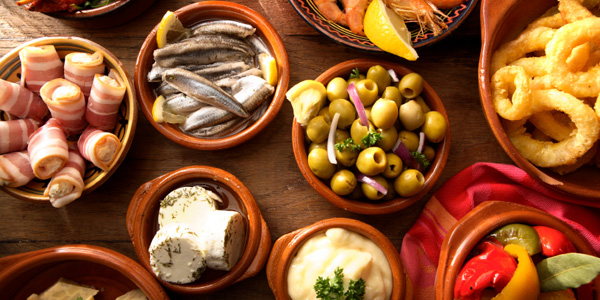 This Saturday (July 30th) at 6:30PM is the fifth in the series of Librarian Meet-ups and the first to be on the Peninsula! For this meet-up we’ll gather at the Zambras Tapas Restaurant and Bar in Downtown Burlingame. This is one of my favorite Tapas bars in the bay area. They have a Grilled Dates dish that is Stuffed with blue cheese, walnuts and rosemary, wrapped with radicchio, port wine reduction and is one of the best tapas plates that I have ever eaten. There is also both red and white Sangria and many other amazing dishes to choose from!
 And while I believe it is all of this, there is so much more that it offers. Having gone through the whole program (I emerged in 2008), I’d like to give you my own review of this program.
 EL is about the people

 I never used to enjoy going to the ALA Conferences and I’ve heard so many people say the same thing. They were always too big, too overwhelming, and just… too much. But, at the ALA Conference in Washington DC 2010 I was invited to stay at a vacation house with 11 other Librarians that was organized by
  Typically, I get up at 7-8am on conference days to get to the conference for my morning meetings and various obligations. This is rough considering I also typically spend most of the night out with librarians at various council forums, meetups, socials, and after-hours networking events. It’s during these times that I corner my professional heroes and talk to them about what they are working on right now. I’m interested in learning what the next big thing is that they are excited about. Also, I find that people are far more truthful about their previous projects over a beer then they are at the session they held. People are more open about their fails and how they overcame obstacles at these events then they are in the more professional conference setting. It’s also during these times that some of the best projects that I have been involved with in librarianship arose. Basically, by partying as much as I could with as many brilliant people as I can find, I have been able to learn more meaningful, current, and useful information in librarianship.
 So I got a google+ invite (just bragging)! While I was exploring this new social media and talking to friends and happily putting them all in all of their specifically labeled circles, I started thinking about the amount of metadata that we are creating for each other and about each other. I started thinking about twitter lists, facebook groups, and other classifications in the multitude of social media platforms that we, our company, or our brand, is being put into against our will and without our control.
  This is because these lists and groups generate a massive amount of metadata about our online persona. I originally thought about Google+’s collection of this data specifically because they are in the search, metadata, and ad business. My first thought was how my friends’ classification of me in circles would affect search results for my public online identity (PC Sweeney) that I spent a lot of time constructing. Would it be completely upended because people started putting me in the “douchebag” circle? Would it be possible that whenever someone searched for “assholes” I would rise to the top of the search results because that’s how people had classified me? Or, would I simply continue to be put in the “librarian” circle? Or even… dare I say it? That searches for “awesome” would bring me to the top of Google searches?
 While, I think this would be mostly funny, I wonder about larger companies that have been branded by these lists such as BP, PG&E or Walmart. How can they control it? I don’t think they can either. They could try to avoid social media all together to try to limit their classifications. But then what about FB Places or Yelp that automatically generated a social media space for that company? Avoiding social media would be wrong too.
 PC Sweeney