The ALA has created the ALA Digital Content and Libraries Working Group

The ALA has created the ALA Digital Content and Libraries Working Group which I think may be a good step in the right direction with the encroaching of eBooks, ePublishing, eDistribution, and just about eEverything else. I recieved the email below on the ALA Council Listserv from Molly Raphael who is the current President of the American Library Association. Let me know what you think of this development and ALA’s role in digital content and information.

New digital forms of information offer rich and extraordinary opportunities for libraries to expand community access to information and to revolutionize in positive ways the relationship between libraries and users. At the same time, these new forms of digital content pose new challenges for libraries.

As libraries struggle to meet these challenges of providing digital content in an environment characterized by significant uncertainty and changing on a daily basis, there is a need for this Association-wide group of experts, broadly representative of the many constituencies within the library community, that can proactively address these digital content opportunities and issues at the highest level and from both a policy and practical perspective.

To this end, the ALA Digital Content and Libraries Working Group will be charged to:

  • Advise the Association regarding opportunities and issues related to libraries and digital content and the provision of equitable access to digital content for all.
  • Explore, analyze and share information on various options for expanding access to digital content for libraries and the public and for overcoming legal, technological, policy and economic barriers to equitable access
  • Suggest information and training that would be of use to librarians so that they can make informed choices, serve as advocates for digital access, and design and support digital services.
  • Advise the Association on efforts to increase public awareness and understanding of issues related to access to digital content and the challenges to/role of libraries in providing equitable access to digital resources.
  • Assist in the identification of strategies to influence decision makers—whether government officials, publishers, other information service providers, interest groups, and others—to effect changes that would assist libraries in better serving their communities.
  • Address specific issues such as Business Models, Accessibility, Privacy, Education for the Library Community, Public Outreach and Publisher/Service Provider Relations through working subcommittees, bringing in other experts and advisors as appropriate.
  • Serve as formal liaisons to various ALA and ALA affiliate groups (examples would include the divisions, round tables, ethnic affiliates, and ALA Accessibility Assembly).
  • As appropriate, reach out to other organizations and experts in other fields in order to better understand the broad technological, social and economic environments and trends and their potential impact on libraries
  • Working Group members have been selected based on their high level of expertise and range of experience regarding libraries and digital content, and to be broadly representative of the various constituencies within the Association and library community and various types of libraries and library situations. A list of members of the new Working Group is attached as well as additional details on the Working Group’s scope of work and proposed responsibilities. We are grateful for their willingness to serve and especially for the willingness of the two co-chairs , Sari Feldman and Robert Wolven, to lead this very important effort. ALA President-elect Maureen Sullivan has volunteered to serve as the Executive Board’s liaison.

    Ugh… DVDs are the new eBook?

    Ok, this post is NOT about ebooks but somehow I feel like its along similar lines. I just received this email from Midwest Tapes (who is a fantastic vendor) about a recent change in Time Warner’s policies in regards to sales to libraries. They said-
    We have recently learned that Warner Home Video will no longer distribute theatrical releases to libraries or home video rental stores until 28 days after they release the movies for sale at retailers. This Warner Home Video policy applies to all public libraries and video rental outlets such as Redbox, Netflix, and Blockbuster.

    In addition to being released 28 days after the retail version, Warner’s rental version DVDs and Blu-rays will not contain bonus features or extras. However, we understand that there will be a significant price reduction for these products, apparently amounting to an average $4 per DVD title and $8 per Blu-ray title.

    Warner Home Video has announced that it may seek to enforce its new policy by auditing its distribution partners’ sales. Additionally, Warner may require retailers, like Amazon, Best Buy, Walmart, and Target, to limit the number of copies of a new release that may be sold to a single customer.

    Please note that Warner’s new policy will only impact titles that have a theatrical release, perhaps amounting to about 12 titles per year. Non-theatrical Warner releases will not be affected by this policy.

    Below are the first three Warner theatrical titles affected. Note that Warner’s rental versions will feature rental artwork.

    So, once again, major multimedia companies are giving libraries the shaft. I’m kinda tired of getting picked on as if we’re some horrible organization responsible for ruining the capitalism of America. But what can we do about this kind of thing? Its not good for our business, its a disadvantage to our patrons, and it forces libraries to remain subservient to the whims of commercial America. I have to point out, that libraries are NOT a threat to captalism nor are we in competition with any company in the world.

    Ebooks are already a big enough problem, and now we have to deal with basically the same ideal behind this DVD policy too? Anyone have a solution?

    Library Good News: The FCC Knows How Important Libraries Are!

    I received this email from the fabulous Bobbi Newman on the ALA Council Listserv about today’s FCC announcement regarding broadband adoption that highlights the role of libraries now and in the future. Bobbi wrote up a fantastic (and analytical) post about it already so I’ll just highlight the part that is about libraries so you don’t have to read the whole thing. Here is the part most related to libraries;

    For millions of Americans, libraries are the only place where they can get online. For millions more, libraries are an important complement to at-home connectivity, and they remain, as they always have been, a trusted resource in communities.

    During the day, libraries have become job centers and librarians career counselors – and after school a place where many students go to do homework online. Last year, more than 30 million Americans used library connections to seek and apply for jobs, and 12 million children used them to do homework. Millions of others are using library connections for health information. Many – but not enough – of America’s 16,000 public libraries have become vital centers for digital literacy.

    Librarians are helping meet some of the vast need — and I applaud them. But according to a recent Gates Foundation-funded survey, only 38% of all libraries offer a basic digital literacy class. In rural areas, in places like West Virginia, it’s only 25% of libraries. That’s a big missed opportunity. We should aim to double those numbers.

    The E-Rate program – one of our most successful programs – connects schools and libraries to the Internet. Senator Jay Rockefeller, the great champion of E-Rate who, along with Senator Olympia Snowe and others, created the program, once said, “Our classrooms and our libraries are often the only way that our children and citizens can tap into the wonders of computers and the links to a vast world of information and knowledge. We want schools to be a place where children delve into computers. We want libraries to be vibrant centers of learning for families.”

    In that spirit, we plan to launch a proceeding to explore how the E-Rate program can expand access to digital literacy training at more public libraries and schools across the country and, ultimately, forming a Digital Literacy Corps.

    Librarians Go Tapas! Bay Area Librarian Meet-up

    This Saturday (July 30th) at 6:30PM is the fifth in the series of Librarian Meet-ups and the first to be on the Peninsula! For this meet-up we’ll gather at the Zambras Tapas Restaurant and Bar in Downtown Burlingame. This is one of my favorite Tapas bars in the bay area. They have a Grilled Dates dish that is Stuffed with blue cheese, walnuts and rosemary, wrapped with radicchio, port wine reduction and is one of the best tapas plates that I have ever eaten. There is also both red and white Sangria and many other amazing dishes to choose from!

    So come down to Burlingame and go tapas with other bay area librarians. You can meet librarians from all over the bay area who are working on amazing projects, sit around and have a drink with some good library folks, or just relax and eat some good food while making plans for librarian world domination.

    Let us know you’re coming on the Facebook Event Page

    And don’t forget to like the Bay Area Librarians Page that makes these events happen!

    Saturday Night July 30th at 6:30PM
    Zambra Tapas Bar
    http://www.zambratapasbar.​com/
    248 Lorton Ave
    Burlingame, CA 94010
    Phone : 650-344-5655
    fax : 650 344-5055

    Will Google+ be Another Brick in the Tower of Babel?

    So I had this random thought and posted it to Google+.  The conversation was one of those rare good conversations that occur on social media sites. So good in fact, that I thought I’d post it here for anyone not on Google+ yet or have no desire to make the switch.

    PC Sweeney -Thought… With the significant fracturing of the social media that should be bringing us together, building communities, and having the potential to create a more perfect society and/or better social spaces are we recreating another tower of Babble? When we all join a different social media space will we be able to communicate with anyone?

    PC Sweeney – I currently speak Google+, Facebook, myspace, twitter, youtube, flickr, vimeo, wordpress, goodreads, librarything, blogger, picassa, bucketlist, and a few others….

    Eric Riley – This is why there needs to be real social media federation. You should be able to select the social site you prefer, for whatever reason and be able to connect with people from other sites with no barrier.

    Unfortunately most websites prefer to see their users as a commodity rather than a person. Facebook is trying to pull some serious dick moves to prevent people from leaving, like not being able to export your data, closing ads for other sites, not allowing api access, and not allowing a user to delete their profile. It’s petty, childlike behavior.

    As federation building protocols like xmpp becomes more ubiquitous we’ll see how certain social sites want to play. Google has said thy want to allow federation VIA G+ but its not in here yet. My guess is that this is a result of this still being trial phase, and that it will be implemented eventually.

    Ellen Carey – I’m all for federation. I can (and usually will) learn to “speak” any social media you put in front of me. But trying to keep up with the content on all of them can hinder, rather than help, true communication as my attention gets stretched ever thinner – especially when we make a lot of noise contributing what amounts to the same content through multiple channels. At the same time, many of the people I want to connect with are disinclined toward the level and range of social media fluency that interests me, and are unlikely to leave their familiar Facebook for Google+ (for example). It would be great if we could prevent our communities from being splintered by what is a cool new tool to some, and yet another overwhelming thing to learn to others.

    Jennifer Meyer – A great question for sure. It’s funny but I think we sort of lose sight of what the technology is – at least I’m guilty of this. But really it’s just a tool. It gets used as any other tool and is only as effective as its user. If as a human being I interact on social media with the same personal blind spots as I do in “real live” then I’ll limit my communication regardless of what platform I’m using. Despite the possibilities we are still “stuck” inside our own little sphere.

    Would social media really be more productive at bringing others together for social change with a federation?? I don’t know; bet it would depend on the paradigm of the society when the federation formed. What is the goal of social interaction? To find differences and celebrate, or to find similarities and celebrate? Neither is wrong in fact I’ll bet we need both – but do we purposely go out and look for differences??

    Ellen Carey – Great points. I agree: we need both. And I think many (most?) of us seek out and celebrate the similarities rather than the differences – through social media as well as F2F.

    As far as tools go, I’m always thinking about the less tech savvy people I know who are overwhelmed by the learning curve for each new thing. Their inability to keep pace with the rapid introduction of new technologies can isolate them when fellow community members like me move on to newly-formed communities based on new tools. It can also disenchant them with social media in general, and I have very mixed feelings about that problem. On the one hand, I think we all need to take it upon ourselves to keep up with the pace of change. On the other, I don’t want to leave anyone behind, and I don’t think it’s reasonable for me to expect everyone to be as geeky about becoming fluent as I am. How do we consider the very real challenges of access to information and community, in such a rapidly changing landscape, for the significant number of people who are not digital natives? The idea of federation is on appealing solution in theory. I’m not sure how it would work in practice.

    Jennifer Meyer – Ellen well thought! One phrase came to mind as I was reading that. Access points. And isn’t that awesome that librarians do that? Perhaps part of our future is going to be creating and disseminating access points for that social community – whatever that might be. It will become critical that we acknowledge those challenges in a similar way to ADA considerations. Particularly when it might be lack of digital access that prevents people from learning those new technologies.

    Ellen Carey – Absolutely! I love the idea of librarians developing access points to communities. And I like the analogy to ADA considerations. I am still (always) wrestling with the question of what is reasonable to expect of those who have digital access, but lack the desire to develop a level of fluency in the digital world.

    ALA Emerging Leaders; Eff the projects it’s about the people

    ALA describes the Emerging Leaders Program as follows;

    “A leadership development program which enables newer library workers from across the country to participate in problem-solving work groups, network with peers, gain an inside look into ALA structure, and have an opportunity to serve the profession in a leadership capacity. It puts participants on the fast track to ALA committee volunteerism as well as other professional library-related organizations.”

    And while I believe it is all of this, there is so much more that it offers. Having gone through the whole program (I emerged in 2008), I’d like to give you my own review of this program.

    EL is NOT about the Projects.
    This is the most important thing you can know about it!  This is also the part of EL that I’ve heard the most complaining about.  I might seem like it is about the project at times and you’ll do a lot of work for it.  But, if you go into this program thinking that the whole thing is about the projects you’re going to be sorely disappointed.  I’ll admit, mine was ok at best, it definitely didn’t give me any new found leadership skills, I didn’t develop or learn anything from the project itself and I didn’t gain some remarkable problem solving skills or anything. My mentors were barely adequate and my project was never used by the sponsoring organization. But, it was very beneficial in that I met and worked with some great librarians on something meaningful and tangible and I did learn a lot about the ALA organization from the project. But EL is not about the projects anyway.

    EL is about the people
    What I did gain from my whole experience is an amazing “tribe” of people who I’ve grown to love and respect in many ways. Many of these people are a large part of my personal life, some are a part of my conference life, and some I only get to see occasionally. When I go to conferences I have a group of people to meet up with and learn from. When I have questions professionally, I have a group of people to ask. When I need some kind of support for a project or idea, I have a group of people to offer it. When I’m sitting around on my butt on a Tuesday night with nothing to do, I have someone to call and chat with for no particular reason.

    EL changed my entire conference and ALA experience!
    Because of the people that I’ve met through the EL program I have been able to run for ALA council, get involved in committees, and put together exciting and fun activities at conferences. Before EL, I was overwhelmed by the whole experience and it was originally through this program that I met JP and Justin who started the ALA Think Tank and moved me from just showing up to conferences to actually participating in them through their whole Partyhard and Makeithappen attitude. It is for the people that I owe my huge thanks to Emerging Leaders.

    I highly recommend that you get involved in this program, do your project so you can makeithappen, and most importantly partyhard with your fellow Leaders!

    Plus, it’ll look good on your resume.

    New Orleans Annual, June 26, 2011: Flash Mob

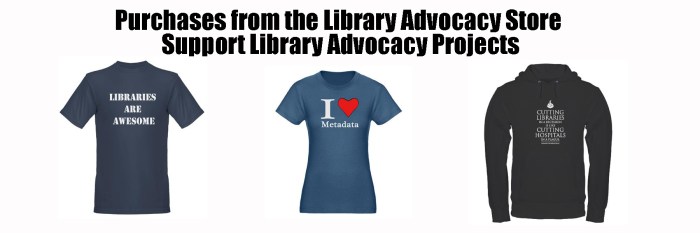
    ALA’s first ever Advocacy Flash Mob and Freeze took place in Jackson Square on Sunday at 5:50 pm amid a downpour that some participants dubbed a “Flash Flood Mob.” More than 50 library advocates gathered in front of Saint Louis Cathedral despite the rain to dance and sing “When the Saints Go Marching In” as a lead-up to the Freeze. Most wore t-shirts with library slogans on them to identify themselves as librarians supporting the New Orleans community, just as ALA did in 2006 when it was the first conference to return to NOLA after Hurricane Katrina. Libraries care about communities, and communities should care about libraries. The Freeze Mob was organized by the ALA Think Tank as a #makeithappen event.

    Adam Block talks to JP Porcaro about “Off the Fence”

    While in the “office,” Adam Block started talking to us about his company called Off The Block. We tried to get the interview in the “office,” but we decided to step out into the hallway instead.