Dear Anatomy of a Librarian – You forgot kicking ass and being awesome.

I always find these kinds of graphics interesting. Usually though, its because I’m interested in their design instead of the information. In this case, I think that this graphic brings to mind more questions than it answers but it’s still pretty.

Anatomy Of a Librarian

1) The average librarian makes 60+ a year? I’m now wondering how they came up with that average. Obviously, they are taking full careers into consideration and not just the entry level positions. In which case, I wonder how many years an average librarian has to work to reach the average pay? And that makes me wonder, what is the average career span of a librarian? By this, do they mean only those working as a librarian or are they considering library manager, directors, and other higher management as well?

2) The highest largest amount of librarians are between 24 and 54? Are you freaking kidding me? So the average librarian is aged somewhere in the average age range for a person who has professional level career before retirement? I would be far more interested if this was broken down into at least 5 year increments since you need an MLIS to be a librarian and so few people get post graduate degrees before 24 anyway. People also begin to retire after 54 so this 30 year age range makes this data completely uninteresting. Basically they are saying that people in the average working age range have jobs.

3) The left and right brain stuff is kinda interesting, but what is more interesting is what the crap is written in all those little subsections of this girl’s cranium? I mean, there could be anything in there! I think, at least its my guess, that this is where the how to clean the toilet, dealing with unruly patrons watching porn, and changing lightbulbs is listed in the graphic because I don’t see that anywhere else. The big stuff on the outside is everything I thought librarianship was going to be, and the I’m guessing the stuff on the inside is all the other stuff nobody tells you about.

4) The where they work part is actually interesting, I liked this part.

5) Brief history? No kidding… Franklin to Dewey? What about Carnegie!? This crap is only 150 years long and at its most recent it’s 130 years out of date!! Libraries have been around since 350 BC and this is the crap they decided to show? WTF?

6/7) Gender and recreational activities are also fairly uninteresting because it’s exactly what you would expect. But I want to add a section. I think that overall, librarians most significant recreational activity is kicking ass and being awesome! So where is that catagory?


Get ready for ALA in New Orleans with this great library gear!!
Purchases from The Library Advocacy Store Support Library Advocacy Projects
like the Great Librarian Write-out

Reference is Dead, Long Live the Enabler

At the time of writing this blog post, I’ve read two articles on the death of reference. The first was called “Is Reference Service Dead?” by Mathew Ciszek and the second was by Michael Stephens and it was called “Stuck in the Past.” Even I wrote a reference is dead blog post once many years and two other blogs ago. So, if reference is so dead, and it’s been written about as long as I can remember, why are we still talking about it? I think there are four choices.

1) It’s not dead
2) We haven’t come up with something better
3) Folks refuse to let it die
4) Students in Library School who think it’s something new to write about

Here is where I tell you which one of the four that I think is true. The truth is, I don’t know. I’m pretty sure that it’s a little of all four but my thought is that mostly its number two. I think there is something better than reference services and it ties into a future post that I’m working on. But, here is the reference version of that future blog post.

Eli Neiburger of the Ann Arbor Library District argues that armed with Google and an internet connection, the need for reference librarians has diminished. “Travel agents were outmoded because people felt they had better access to the information than they could get from the travel agents”, he said, and just as travel agents have become a thing of the past, so will the anachronistic reference librarian. With everything on Google, who needs them? (from Ciszek’s blog)

My thought is, he’s right! Who does need them? Lonely seniors and folks who can’t or don’t know how to access Google might need them but for the general public, the crap they dreg off the bottom of the information sewer on Google is good enough for them. Even though it might be wrong, or poorly written (like this blog), or out-of-date, or an ad for a guaranteed weight loss solution, they are satisfied with what they now “know.” Really, and I hate to break this to folks, but it’s all about perception. If the perceive that they have what they need, then that’s all it takes.

I’ll add in as a side note, that I do wholeheartedly disagree about the whole IT hiring frenzy thing though

But don’t worry; I’m not about complaining I’m about answers and solutions. So, here is my solution –

Reference is dead, long live the enabler.

Before I get more into my thoughts here, I can’t even begin to tell you how important it is for librarians to watch this video. So please, I’m begging you to watch it. I blogged about it once before, but here it is again.


So if we don’t have reference as a core service, then what do we have? We have the ability to enable people to live more fulfilled lives. We can do this by providing answers (some forms of reference), materials for better lives (more extensive collections like guitars, tools, seeds, gaming, augmented reality), a third place (a quiet work or relaxation place away from kids and husbands and wives), and a place to learn with the resources they need to learn (isn’t this really what we are about at the end of the day?). Hey Michael, notice I didn’t mention books?

What I’m saying here in a round and about way, is that we need to continue what libraries have always been, and that is to be enablers to those who want to learn and provide the resources that enable our communities to learn. It’s not reference, its enabling our patrons to live more fulfilling lives. After all… By answering reference questions wasn’t that the real goal anyway?


Get ready for ALA in New Orleans with this great library gear!!
Purchases from The Library Advocacy Store Support Library Advocacy Projects
like the Great Librarian Write-out

Partnerships = Library Awesome!

I’ve been thinking about some of our libraries most successful programs and services that we offer. I realized that almost all of the most successful ones have come from partnerships that have been cultivated by the staff. These partnerships have led to larger program numbers, a wider array of programs, and increased services and collections. Even more importantly, we are being offered money and resources to provide some things that we wouldn’t have been able to provide before. The following list are some of the partnerships we have at EPA Library.

Literacy Fair
East Palo Alto is holding its first ever Literacy Fair called Reading Rainbow in the Park. This came about through a partnership with the Stanford Alumni Association. We were contacted by a liaison from this group who had the idea for a fair and came to us for help. We are providing many of the books and giveaways as well as some of the entertainment and they are providing the organizing of the event itself.

Health and Wellness Programs
We have a local community health organization that provides a lot of the medical services in the area and we offer them a space for community outreach and education about health issues. They especially do many programs for our seniors. My librarians work with this organization to bring those presentations to our library.

Guitar Lending Library
This partnership isn’t complete yet, but it bears mentioning. I received a grant to circulate guitars at the library and one of my librarians brought in a band called the Vintage Music Collective to perform. One of the members of this group teaches music lessons in EPA through their non-profit called Live in Peace and we will be providing the guitars while he provides the lessons.
Catered Events
One of my librarians works closely with an organization called Jobtrain that provides vocational training in the Culinary Arts. The community members who are involved in this program need somewhere to showcase their culinary skills and talents and we have events where food is always welcome. So, these students “get to” provide food and food services to some of our larger events.

Seed Library
This is one of the few ones that I was the one who approached a local organization for. Our Library offers a seed library to the public that was modeled after the Richmond Grows Seed Lending Library. When I heard about the library in Richmond I looked around in our community and found the local gardening non-profit called Collective Roots that runs the Farmer’s Market. When I told them about the seed library they jumped at the chance and we now offer seeds for “check-out” from our library. We also have plans to expand to tools for gardening and they provide gardening programs from our library.

Poet Library
An organization called School After School for Successful Youth (SASSY) is an offshoot of the jobtrain organization. The students in this program create a large amount of art, literature, and poetry and they need a space to display their work within the community. We are simply giving them a wall to display the work of the community members. Eventually, (they don’t know this yet) I want to expand this partnership to bound and cataloged materials for circulation. Sort of, a local authors collection, but published and provided only by the library. I did something similar when I was an elementary school librarian and I think it would work well with this kind of partnership.

East Palo Alto History Project
We are working with Stanford students to create a history of EPA mural across the back wall of the library. This mural will show the history of East Palo Alto through the eyes of the library as it has moved and changed over the last 75 years. The movement and changes that occurred in the library parallel a lot of what has happened here and is very reflective of the changes in the community.

We have many more, but those are the ones that I am most excited about. Basically, I’ve figured out my job in this community is to find ways to say yes to as many things as I can then figure out how to make it work. While I might say “not yet,” I almost never say no to a community member unless the service they want to provide lies outside the scope of librarianship or community building.

What I want to know is-
1) What partnerships are you building in your community?
2) What would you say no to?
3) What are some of your dream partnerships?


Purchases from The Library Advocacy Store Support Library Advocacy Projects
like the Great Librarian Write-out

Seed Library Opening Day (video)

Here is a video of our seed library at EPA Library.

More information about seed libraries can be found from our great model organization Richmond Grows.


Purchases from The Library Advocacy Store Support Library Advocacy Projects
like the Great Librarian Write-out

Starting an E-Reader Lending Library

This is my grant narrative for the East Palo Alto E-Reader Lending Library. This opportunity arose because a neighboring library had a friends group with unspent funds from a grant. The money needed to go towards the implementation of some kind of technology. Basically, I know that a few other librarians have started some kind e-reader lending library and I wanted to jump into the e-reader fiasco sooner rather than later (we saw what happened to borders) so I put this grant idea together.

Short Description –
A set of E-readers with high-demand subject-specific content pre-loaded to check-out to community members.

Long Description –
The East Palo Alto Library, as a branch of the San Mateo County Library, seeks to create innovative and exciting collections to engage our users in ways that meet their changing needs. We have established unique collections as part of the East Palo Alto Library that includes a Seed Library, circulating laptops, and a newly implemented Guitar Lending Library. By expanding our unique collections to pre-loaded and high-demand subject-specific e-readers we are seeking to engage the public with resources that they may otherwise lack access to. Some of these non-fiction resources would include career- and job-seeking guides, as well as cooking, entrepreneurship, business management, and travel guides. Besides non-fiction, the East Palo Alto Library has a high demand for some genres and authors of fiction materials as well. Some of these include many urban fiction series, mysteries, thrillers, and various authors within these genres. These kinds of collections can help adults with their educational and recreational resource needs.

Besides providing e-readers with content that is exciting to adults, some e-readers would be pre-loaded with many titles and genres that would interest children and teens. Children are growing up in the information age and are considered information natives in the ways in which they interact with digital mediums. With this understanding we can appeal to the techno-appeal of digital environments by providing student resources, picture books, early-readers, and fiction materials for both teens and children.

It is also becoming increasingly evident that seniors are re-discovering the joys of reading through the use of e-readers. These devices are becoming more simplistic to use for those older adults not familiar with digital media and as the boomers (who are techno-savy) age, we are seeing an increase in retirees with strong computer skills who are enjoying reading on digital devices. Also attractive, is that the easy-to-read e-ink text on the devices can be effortlessly increased in size for easier reading for individuals who may have hardships of sight.

E-readers also lend the library with interesting and new opportunities for collection development. The “collections” kept on the e-readers can vary widely and because an e-reader can hold up to 3,500 books, many varied collections can be kept on one e-reader. These collections are easily and cheaply interchanged if needed and can be supplemented with many of the free e-book resources found online as well as through access to the library’s Overdrive digital book resource. These kinds of innovations will allow the library to continuously interchange collections while not being forced to throw away or weed existing collections thereby creating a greener organization as well.

My big questions that remain are…

  • What percentage of funds do I put towards the pre-loaded e-reader collection?
  • What percentage of funds do I put towards e-readers?
  • And most importantly, which e-reader do I purchase?
  • The third question seems to be the most difficult one to answer. Do I go with popularity (Kindle), ease of use (Nook), more exciting for children (Nook Color), and there are so many other variables that I really don’t know where to begin to start researching this. So I purposefully left out, which device I’m planning on purchasing.

    More info…
    If you haven’t followed ALL the e-reader debate in its all encompassing and over-passionate glory (neither have I, it’s just too overwhelming) here are some good places to start.

    Stephen’s Lighthouse
    Amazon to Launch Library Lending for Kindle Books

    Heather Braum
    Discriminating Against Libraries 26 ebook Circs at a time

    Jason Griffey
    EBooks Dominate as Most Popular Format?

    Librarian in Black
    Questions we should be asking about Kindle Library Lending

    Librarian by Day
    Some Questions for Overdrive and Amazon about the Kindle Lending Library

    Agnostic Maybe
    Houston We Have a Problem

    Librarian in Black
    EBook User’s Bill of Rights

    Librarian By Day
    Publishing Industry Forces OverDrive and Other Library eBook Vendors to Take a Giant Step Back


    Purchases from The Library Advocacy Store Support Library Advocacy Projects
    like the Great Librarian Write-out

    Punk-Ass Book Jockey
    Librarians Against DRM
    The Dark Ages Began With Closing A Library
    ..

    I’m Starting a Seed Library at My Library

    This is the Press Release or this project. I will post more details for folks interested in starting one. But really, the best instructions for starting a seed library come from Richmond Grows. They have instructions, videos, and everything you need to put yours together.

    Just as one seed can produce many seeds, one idea can change many lives. Free public libraries were revolutionary in their time because they provided access to books and knowledge that had not previously been available to a large segment of the population. A free seed lending library can also provide people with a chance to transform their lives and communities by providing access to fresh, healthy food that may not otherwise be available.

    What is a Seed Library?
    A seed library is a lot like a traditional library in a number of ways. Patrons of the seed library need to sign up, learn how to “check-out” seeds, and, of course, the library is free! The big difference is that instead of checking out books or DVDs like a traditional library, patrons can check out seeds to grow in their gardens at home. While, we don’t expect anyone to return the seeds to the library, we do hope that the residents of East Palo Alto learn to grow and share their fresh fruits and vegetables.

    How Did it Start?
    The East Palo Alto Seed Library began as an idea spurred by the Richmond Grows Seed Library at the Richmond Public Library. You can check this library out at www.richmondgrows.org. The EPA Library partnered with a great local non-profit called Collective Roots to bring a similar idea to the residents of EPA.

    Who is Our Great Partner?
    Collective Roots is a local non-profit that “seeks to educate and engage youth and communities in food system change through sustainable programs that impact health, education, and the environment.” This group is also responsible for the East Palo Alto Farmer’s Market that is held every Saturday from 2-5pm in front of the EPA YMCA. They also work with youth and adults to design and sustain organic gardens on school and community sites that are linked with kindergarten through 12th grade curriculum provided by Collective Roots.

    The East Palo Alto Seed Library will be open to everyone starting April 22nd. It will provide, in addition to seeds, education about growing healthy and sustainable foods and gardens. The Seed Library is open to all residents of East Palo Alto, with no charge. It is maintained by EPA Library staff, Collective Roots, volunteers, and supported by donations.


    Purchases from The Library Advocacy Store Support Library Advocacy Projects
    like the Great Librarian Write-out

    Punk-Ass Book Jockey
    Librarians Against DRM
    The Dark Ages Began With Closing A Library
    ..

    The #Partyhard Post: How Partying Can Make Libraries Better

    This post stems entirely from @librarianjp and our conversations on FB and his youtube video. From what I understand, he got inspired by Andrew W.K. so I’m researching that guy too. Anyway, I wanted to give him credit for getting me to think about this in a more creative way. Here it is…

    Librarians need to party more and party harder. Now I know what you’re thinking! Yes, I have been to ALA and I know that librarians do party pretty well, but my thoughts go beyond this and I can only explain them from some of the things that have happened in my experiences with partying with librarians and what I think can come from librarians embracing some aspects of the #partyhard community.

    A Celebration of our Profession
    One of the first things that JP said to me about the profession of librarianship and the whole party hard theory was to the effect of needing to celebrate our profession more instead of mourning it. This really hit home for me at the time it was said because I was just reading about layoffs, libraries closing, hours lost, budgets cut, etc… I really feel like there are quite a few people who are quietly mourning the loss of this profession. But there’s no reason that we need to go out quietly. If we do really wind up going out, we should go out loud, kicking, screaming, and celebrating everything that libraries have done for the people of this country for the last 236 years. Really, our fellow librarians have accomplished a whole lot when you sit back and think about it! So now let’s celebrate it!

    This leads me to something I despise but I will name it here. It’s a book called “The Secret.” Let me state that I HATE this book for a number of reasons. *But really, the power of the theory behind the book is the power of positive thinking. By believing that what you want can be accomplished you can accomplish it.* So, as a profession we need to begin this cycle of believing we can accomplish everything we need to. I don’t think that this can start from the position of negativity or self-doubt that I keep seeing and hearing but needs to begin from a position of positive actions. What better way to begin this cycle than through a party and celebration of our profession?

    Party With Each Other
    This is a conversation that I have had many times. In fact, I said something similar here in Loida’s video. The summary is that I’m always a little weary of going to sessions and workshops at conferences. This is generally because these were put together up to a year or more in advance. The people I’m interested in hearing from all write about what they’re excited about online and whatever it is that they’re presenting on was talked about on their blogs, twitter, youtube, etc… when they first thought of it. I almost never learn anything new from sessions. I do, however, learn incredible amounts at the socials and meet-ups. The people I’m excited to learn from are talking directly with me and telling me about what they are working on and excited about right now. I get to ask questions and get feedback on what I’m excited about on a personal level. People say what they wouldn’t or couldn’t say at a workshop and there is a significant barrier that is broken down in the social scene. The end product of this is that I have never learned more than when I partied with the people who I am a geeky fan of.

    My other problem was brought up by Andy Woodworth and I fairly snarkly answered that the problem could be solved if we partied more. The problem was that library systems don’t collaborate enough. I think that a large part of the lack of collaboration and sharing between library entities is that many of the people involved in those organizations never meet. So, to help with this, Andrew Carlos and I started some Librarian meet-ups in the Bay area. We have only had two and I’ve only been to one, but at just this one meet-up I found out about a project happening in my neighboring library system that is only about a mile away that would allow for some kind of partnership with a project that I’m working on. If we hadn’t partied together, we wouldn’t have had this opportunity to learn from each other and see what we are each doing. Now, I have new collaborative project for Fall, I know what other libraries in my area are doing, how we can collaborate, and I know new people to plan exciting new services and programs with.

    Party with our Patrons and Our Community
    This was a completely random and recent thought that I had in the ALA Think Tank group. I have not really tested or tried this so I’ll just throw it in here at the end in case anyone is still reading.

    What if we partied with our patrons? What if we just went to the bars in our communities and hung out all night, danced, drank, and really got to know our patrons in ways that we don’t get to know them at the reference desk? What could we learn about their real needs and wants? What would they tell us in a social setting at a bar or restaurant or concert that they wouldn’t tell us in the library? What do you think?

    I guess I should say that at some level I have actually done this but not exactly in the way that I was thinking. While I haven’t really tried to make connections by partying in my community, I have partied in my community and I have made some connections. The first was that I was introduced to someone who already knew about my Guitar Project and had been following it because he wanted his organization to donate money to it! He actually knew me before I ever met him! (I was famous in my own mind for like 10 seconds) and the second was that I found out about a local chapter of the group called Guitars not Guns and they also want to help with the guitar project. But again, I wasn’t looking for connections as I’m proposing here, just out for the night. What if I was actually looking to meet folks?

    *that summary just saved you $14.00 on Amazon so buy someone a drink.


    Purchases from The Library Advocacy Store Support Library Advocacy Projects
    like the Great Librarian Write-out

    Emerging Leaders Running for Office!

    If you were a past or current EL you can support your fellow Emerging Leaders by voting for them in the 2011 ALA Elections! I’d link all of their info but it looks like you can’t get to it unless you have logged in to the ALA site for voting.
    Eileen Bosch
    EL 2010
    Candidate: ALA Council

    Keri Cascio
    EL 2007
    Candidate: ALCTS Member at Large

    Amber Creger
    EL 2008
    Candidate: ALSC Newbery Commitee

    Mara Degnan-Rojeski
    EL 2010
    Candidate: ACRL LPSS Member at Large

    Jenny Emanuel
    EL 2007
    Candidate: ALA Council

    Angelica Guerrero Fortin
    EL 2009
    Candidate: ALA Council

    Ed Garcia
    EL 2010
    Candidate: ALA Council

    Wendy Girven
    EL 2010
    Candidate: ACRL ULS Secretary

    Chris Harris
    EL 2007
    Candidate: AASL Treasurer

    Arianne Hartsell-Gundy
    EL 2010
    Candidate: ACRL LES Vice Chair/Chair Elect

    Megan Hodge
    EL 2011
    Candidate: NMRT Leadership Director

    Tracey Hughes
    EL 2007
    Candidate: MAGERT Vice Chair/Chair Elect

    Florante Peter Ibanez
    EL 2007
    Candidate: ALA Council

    Susan Jennings
    EL 2010
    Candidate: ALA Council – NMRT Representative

    Darcel Jones
    EL 2010
    Candidate: ALA Council

    Robin Kear
    EL 2008
    Candidate: IRRT Member at Large

    Kate Kosturski
    EL 2011
    Candidate: ALA Council

    Portia Latalladi
    EL 2009
    Candidate: PLA Board of Director, Director at Large

    Kirby McCurtis
    EL 2010
    Candidate: ALA Council

    Elizabeth Moreau
    EL 2010
    Candidate: ALSC Newberry Committee

    JP Porcaro
    EL 2010
    Candidate: ALA Council

    Jacquie Samples
    EL 2008
    Candidate: ALCTS CRS Vice Chair/Chair Elect

    Wayne Sanders
    EL 2008
    Candidate: ACRL ANSS Vice Chair/Chair Elect

    Wendy Stephens
    EL 2008
    Candidate: ALA Council

    Holly Tomren
    EL 2009
    Candidate: ALA Council

    Jennifer Wann Walker
    EL 2010
    Candidate: ALA Council
    Candidate: SLAS Member at Large

    Janel White
    EL 2010
    Candidate: NMRT Vice President/President Elect

    Michael Witt
    EL 2008
    Candidate: LITA Director at Large

    Lynda Kellam
    EL 2010
    Candidate: ACRL’s Law and Political Science Section Secretary


    Purchases from The Library Advocacy Store Support Library Advocacy Projects
    like the Great Librarian Write-out

    A Post from the Past- “It Looks Like They Run The Place”

    As I have been exploring my ideas about librarianship the last couple of weeks, I haven’t really written or posted anything lately. I’ve been quietish on Twitter and posted about other things on Facebook. But during this time I went and read the blog I kept while I was in Library school and while I was working as an elementary school librarian. I was reminded of why I became a librarian in the first place.

    This post, and a few others to come are going to be reposted from my old blog to remind me what I thought was important and what I still think is important after years of hard labor as a “real” librarian. This post was called:

    It Looks Like They Run The Place (and They Do)

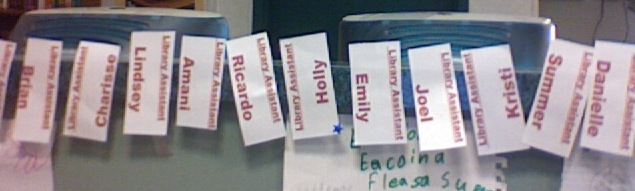
    At the beginning of the school year one of the students who had helped in the library quite a bit last year asked if he could have a nametag like someone would wear at a real job. Thinking that I would humor him, and besides he had actually done a lot in the library, I made one out of a piece construction paper. It was handwritten, had his name under the words “library assistant” and it was taped to his shirt. He wore so proudly that soon I had a large number of students coming into the library asking if they could be library assistants too. At the time I was putting together my display for October so I told them that if they could find 5 library books about something happening in October to add to the display then they could be library assistants too. Much to my surprise they did it enthusiastically. It took many of them 4-6 days to find all the books but very few students gave up trying. So now, about a month and a half later I have about 15 library assistants.

    Here are the new typed nametags. I just like the way they looks all lined up like this.

    This means my role in the library has drastically changed. I now have a more of a supervisory role. My assistants have taken on a number of projects of their own that they designed and that they are in charge of. Every once in a while I design a project for them and they take it over, but they are getting better and better at creating some of their own ideas and putting them into action.

    One of the projects that I assigned to them was the creation of more posters similar to the ones I had described in an earlier post. After I remove a cover they cut it up and tape it together and staple it to the wall wherever they can find an open space. Here is the picture of their work;

    They have also taken over the monthly displays. The display at the front of my desk is reserved for events that take place throughout the month such as holidays during the current month or events that happened in that month. These are where the five books that students find to be a library assistant are displayed.

    There is also a display on a long shelf that they completely control. They decide what kind of books are put up there and they create the signage for it. It is completely theirs. This is what it looks like.

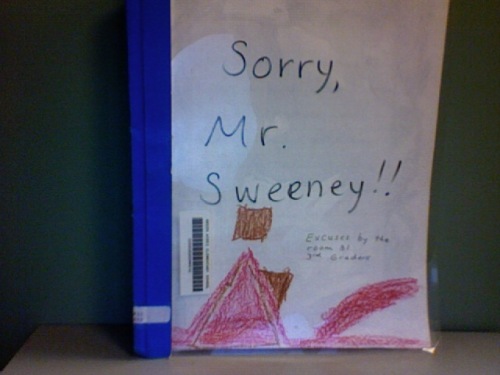
    Lastly, the students can also create their own books that I catalogue, put in the collection, and allow them to check out. Some of the teachers also have classroom projects where the class creates a book for the library and I do the same with that one as well. Since they are almost always checked out this is the only picture of one that I have.


    Purchases from The Library Advocacy Store Support Library Advocacy Projects
    like the Great Librarian Write-out

    Punk-Ass Book Jockey
    Librarians Against DRM
    The Dark Ages Began With Closing A Library
    ..

    The Revolution Won’t be Televised but it Will be Facebooked.

    The ALA Think Tank grew from a group that was originally conceived at the ALA Annual conference in Washington DC as a way to save money on conferences. The original 13 members were made up of young librarians and leaders who had an interest in doing more for the profession and getting more out of the conference. From this, we realized that we cou…ld take advantage of the shared experiences and knowledge of the group and gain even more from the conference. We began brainstorming ways to improve conferences for younger professionals, find ways that ALA can work to better support new young leaders in the profession, and generally advocate for the next generation of librarianship.

    We realized that what was stopping many young professionals from becoming more involved in ALA and other organizations was that the organization is increasingly unresponsive to change. We continuously hear that many librarians are not involved in the organization because “it does nothing for them.” It is our opinion that the organization has itself been institutionalized in such a way that it is suffering from a kind of analysis paralysis and unable to move forward and really achieve what needs to be done for new professionals and to be responsive to the changes that are occuring librarianship.

    The ALA Think Tank operates outside of the restrictions of the ALA and is not bound by the institutionalization of the organization. This allows young professionals the ability to self-create a better conference experience, to learn from each in a more meaningful way, and be the change that they feel they would like to see in the profession. Along the way, we hope that we can lead by example and show professional organizations what it is that its members want by doing those things.

    This new group is a way to share and support new ideas from a wider group of people and as a way to enact a kind of guerilla change in our professional organizations. We encourage you all to share your experiences and ideas for change as well as finding ways to make that change happen. We want to work together to lead the change in ALA that needs to happen before more young and new professionals are discouraged by institutionalization of the org.

    This group’s intent is to not be legitimized by ALA through any of the means that generally occur such as the establishment of round tables, interest groups, letters to the editor, or ALA resolutions, etc… Instead, by working outside of the rules of ALA to improve the organization by doing what it can’t we are going to have the freedom to be the change that must occur.

    We also encourage you all to establish your own ALA Think Tanks within your state organizations if you feel that changes need to occur there.

    Here is the Facebook Group for anyone interested.

    #makeithappen
    #partyhard


    Get ready for ALA in New Orleans with this great library gear!!
    Purchases from The Library Advocacy Store Support Library Advocacy Projects
    like the Great Librarian Write-out