On the last day of ALA Midwinter I thought I would check out the Council Session that was going on that morning. As I stood in the back of the room I watched the session and got a much clearer view into the inner-workings of ALA. While there I sent out a couple of tweets regarding decisions that were being made and much to my surprise I got responses back from councilors who were on the floor of the council right then. It was fascinating to interact with the councilors as they sat through the session and made the decisions that would guide our organization. However, I was a little disappointed because it seemed that, while I did get responses from almost a dozen councilors, this was just a very small percentage of the officials in the room and these were the only ones online that day. It seems to me that the organization can open itself up and use some of these new online tools to communicate and respond more freely with the concerns of the members.
So, with the “gentle encouragement” of Aaron Dobbs, who tweeted that I should come over and say hi, I am going to try to run for ALA Council and hopefully add to the voices and open the dialog with ALA members through online resources. I submitted my form electronically and I have sent my petition in the mail. In case anyone else is considering trying their hand at running for council, getting the petition signed is easy (you only need 25 signatures) and filling out the form is completely painless (basically, just a summary of my resume) and you’re on your way. For anyone interested here is what it all looks like. I’d love to hear anyone’s thoughts on running for ALA Council.
Degrees and Certifications:
Sacramento State University, BA Philosophy 2003 San Jose State University, MLIS 2007
ALA Activities:
ALA Emerging Leader 2008
ALA Committee on Professional Ethics: Intern 2010
California Library Association ALA Student Chapter
LLAMA
PLA
LITA
Offices Held in ALA-APA:
ALA Student Chapter: Co-Chair, Web-Coordinator 2006
Honors and Awards:
SJSU Student Association Award for Online Educational Outreach
Accomplishments:
As Library Coordinator of the Twelve Bridges Library I was given the opportunity to assist in the planning and development of the construction of a 40,000 square foot joint-use library (public, high school, community college) and managed the redevelopment of its website.
As a 2008 Emerging Leader I was given the opportunity to work with an outstanding team of new librarians to develop a mentoring plan for RUSA.
As ALA Student Chapter Co-Chair and Web-coordinator I was able to learn manage an organizations website to increase its visibility and value on the web.
As an elementary school librarian I was able to see firsthand the importance of the role of the school librarian and the services that libraries must provide to children and teens.
As manager of a volunteer program of over 250 retiree volunteers I was able to gain an understanding of the need to provide library services to the growing force of retired Americans.
Links:
www.pcsweeney.com
www.twitter.com/pcsweeney
Professional Concerns:
With the emergence of new technologies, growing information access points, and the loss of institutional knowledge through the retirement of large numbers of professionals, the ALA Council must be ready to critically analyze the changing forces of the organization and place ALA in a position to adapt to those changes quickly and efficiently.
As a Library Branch Manager, I have had opportunities to evaluate the change present in my profession. I participated in the construction of a state of the art library and implement programs and services that are reflective of the role of libraries as community resources. I am engaged in learning and evaluating new technologies that patrons are using to adapt their use to library organizations. I have worked with diverse groups of patrons to create services that suit their changing information seeking behavior. And finally, I have managed organizations to increase their visibility and value within communities.




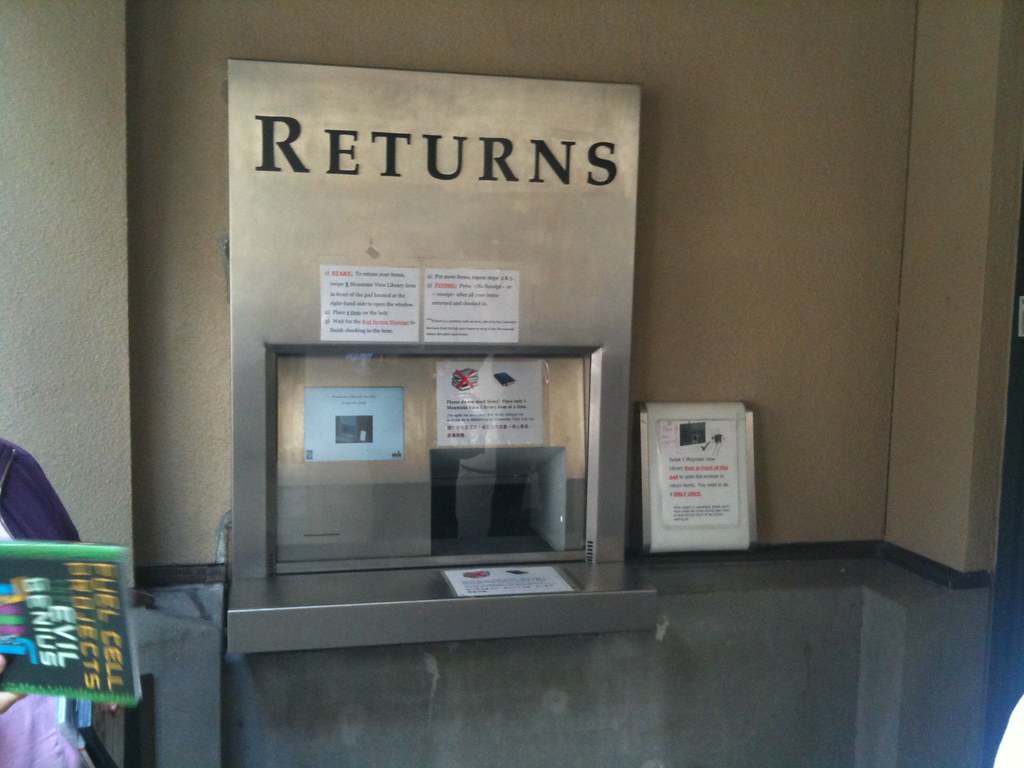

 The first concern is the cost of such a system. In my last library we used the 3M system for RFIDs and automation. The RFIDs cost $0.46 each (we had 180,000), the RFID readers cost a few thousand each (we had almost 20), the RFID printers were rented and still cost a few thousand. These costs don’t include the costs for the servers, wiring, installation, security gates, self check-stations, and software maintenance charges that total some number beyond my comprehension. At that library we didn’t have, and therefore I didn’t include the cost of a fully automated sorting system and all items fell through the bookslot and into one bin.
 My third concern is; how well does the sorting machine actually work? I’ve been to a few libraries that use an automated sorting system that simply doesn’t sort the items in a way that’s even remotely effective. The items are misfed, mislabeled, and missorted to such an extent that the librarians have simply stopped using the system. The complaints from the poor folks who are stuck with these machines are long and plentiful and filled with stories of what could have been better done with the hundreds of thousands of dollars that were spent on the non-functioning machine. Of course the vendors promised the world to these sad librarians and I’ve actually heard the vendors say at conferences that staff will never have to touch a book again! In fact, I’ve had to stop spending time in exhibit halls at conferences because I’ve angered too many venders by my questions that lead them to admit to the Music Man like lie they just blatantly made to the group of librarians who surrounded their shiny new machines that would solve every library problem ever created and sure to come.


 PC Sweeney