I had an amazing conversation with some people on twitter the other morning all about how libraries doing a really bad job of marketing themselves. I tweeted that “I believe that if librarians spent time money on marketing then we wouldn’t be constantly complaining about people perceptions of libraries” and that libraries need to drop a database in order tell people about the other 49. Well, I’m going to take it all back. I realized that I was wrong, the problem is not that librarians are refusing to market themselves, its that our biggest vendors refuse to market their products.
The problem is that it shouldn’t have to be librarians who are marketing and advertising the things that libraries are offering like databases and our various collections. The ones marketing their products to the public should be the ones selling those products to us. If some database company wants my library to buy their product, there should be a demand for their product. If nobody uses their latest proprietary database on the mating habits of the Great Spotted Alaskan Chinchilla, then my library just simply shouldn’t be buying it.
Why are librarians the one stuck paying for a product, and then having to pay to market that product to the people to make sure that demand is high enough to justify buying that product? Why do we have to do their work for them? This is not how it works with any other industry.
Here’s my analogy;
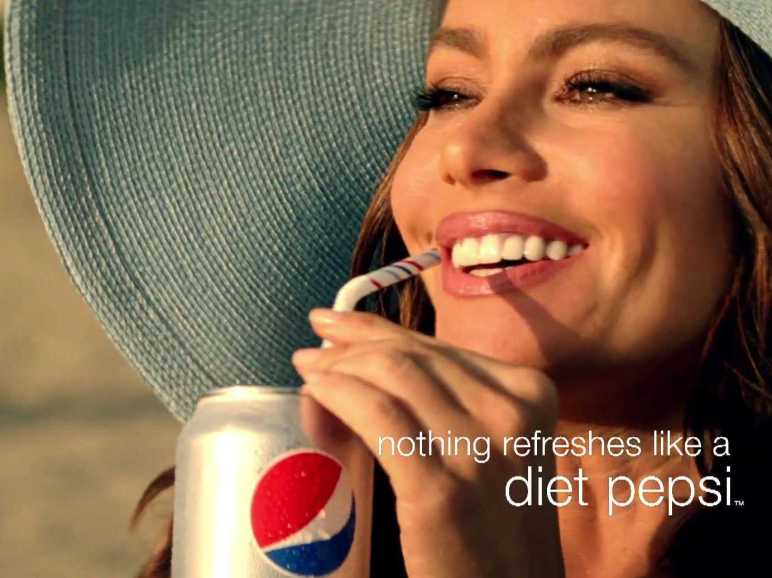
The mom and pop stores on the corner of my block carry all kinds of Pepsi, Dr. Pepper, whatever… But, not once have I ever seen an ad on FB, on TV, on the Radio, in the Newspaper from the corner store telling people how delicious Pepsi is. They might advertise that they have it, but they’d never advertise that anyone should drink it over anything else. You know why? Because Pepsi advertises that people should drink Pepsi, which makes people demand Pepsi, which is why stores offer Pepsi.
But in our case;
A database company sells their database to the library.
But that’s it! That’s all that happens! Then its up to the library to make sure anyone uses it or cares that the library is paying for it. The library has to convince the public that it’s a good product AND the library has to expend resources telling people that they library offers it. The library pays for the opportunity to offer a product nobody wants because the company that makes the product doesn’t spend any resources to tell people how great their product is. It’s as if libraries are paying twice for the product and being forced to do all the big vendor’s work for them as well.
But here’s something to think about.
If one of our database companies started using their money, not to advertise to librarians that they have the product, but to advertise to the people that there is a really great product offered at their local library, then the libraries would have to offer their product due to demand AND people would know that libraries are offering these products. Essentially, by advertising to the public about what their products are offering and how great they are and that they are available with a library card then more libraries would have to buy those databases due to increased demand and libraries would get more people to use their services. Because of this we will also get more engaged and educated library users and that translates into more library support which translates into more funding for libraries which in turn translates into more money for library vendors since more people will be demanding their databases.
What do you think? This was really just a quick and rough brainstorm that I had and it was too long for a tweet so I wrote a blog. Am I totally wrong on this idea? I’d love to know that I’m wrong.
 Page Likes Don’t Matter
 Fundamental library issue
 It’s a learning experience
 Ok, so I’m totally going to admit when I’m wrong but in my defense it wasn’t my fault. I got my MLIS at San Jose State when all they could talk about is branding and how important it is to brand your libraries and I went into library school after managing a heavily branded retail chain. In fact I was so enamored with the idea of branding libraries that I wrote
  But then, I had my interview at the library system I currently work at and I spent exactly 5 minutes in a room with Martin Gomez and realized everything I thought about branding libraries was absolute crap. While I could never even dream to express what he said to me as eloquently as he did in those five minutes, and it’s taken me years to come to terms and process what he said to me, I am going to write about why I now think I was so wrong.
 Governor Brown’s Proposed Budget for FY 12/13 has no money for public libraries. We’re asking the State Legislature to restore $15.2 million in funding.


 Alright team… After yesterday’s Tweet campaign to show support for School Libraries I was wondering what to do next. I mean, what do we do if they do get supported? How can we show our appreciation? Well, luckily I didn’t have to think about it too long. I received this email from Ann Crewdson on the ALA Council Listserv.

 Seedfolks is an eclectic mix of Oakland, CA-based gardeners who cultivate food crops creatively in the marginal spaces of their urban environment.
 This project is a photographic survey of public libraries throughout the United States. There are over 17,000 public libraries in this country. Since I began the project in 1994 I have photographed hundreds of libraries in nineteen states. From Alaska to Florida and from New England to California the photographs show a vibrant, essential yet threatened system.
 Situated within a redwood canyon, the stage will serve as a functional and sustainable structure, as well as a beautiful artistic statement integrated into its natural surroundings.
 This project started with a grant from Portland’s Regional Arts & Culture Council. All summer we lent books to people living outside, got to know them well, and had great discussions about literature. We also invited our patrons to be photographed with the book of their choice, and to contribute their own stories from the road.
 Through our accrued circuits of writers, artists, musicians + filmmakers, The Underground Library aims to showcase the vast output of yet-to-be discovered DIY doers in NYC and beyond, ideally resuscitating the magic of the literary object with small, hand-crafted hardcover books that can’t just be read on the internet or back-ordered from a Barnes and Noble.
 ReadOUT, ACTout is a theatrical performance based on five commonly challenged children’s books that feature alternative families and gender expressions. This production will not only draw attention to banned books week and the right to read, but will also serve to educate the University of Arizona campus about LGBTQ issues and help prevent bullying of those who are different.
 Librarianship is a science. I have spent the past six years using art as a means of scientific intervention in public knowledge economies. In May, 2011, I will bike from Copenhagen to Berlin in a group of 100 librarians from around the world, in the first ever library conference on wheels. I am representing the Molesworth Institute, and hand painting my cycling apparel which will be exhibited in a solo show on Information Technology at the Palo Alto Research Center in January, 2012.
 So I got a google+ invite (just bragging)! While I was exploring this new social media and talking to friends and happily putting them all in all of their specifically labeled circles, I started thinking about the amount of metadata that we are creating for each other and about each other. I started thinking about twitter lists, facebook groups, and other classifications in the multitude of social media platforms that we, our company, or our brand, is being put into against our will and without our control.
  This is because these lists and groups generate a massive amount of metadata about our online persona. I originally thought about Google+’s collection of this data specifically because they are in the search, metadata, and ad business. My first thought was how my friends’ classification of me in circles would affect search results for my public online identity (PC Sweeney) that I spent a lot of time constructing. Would it be completely upended because people started putting me in the “douchebag” circle? Would it be possible that whenever someone searched for “assholes” I would rise to the top of the search results because that’s how people had classified me? Or, would I simply continue to be put in the “librarian” circle? Or even… dare I say it? That searches for “awesome” would bring me to the top of Google searches?
 While, I think this would be mostly funny, I wonder about larger companies that have been branded by these lists such as BP, PG&E or Walmart. How can they control it? I don’t think they can either. They could try to avoid social media all together to try to limit their classifications. But then what about FB Places or Yelp that automatically generated a social media space for that company? Avoiding social media would be wrong too.
 “Here’s a situation that has not gotten much attention at all: Oakland Public Library is slated to have their budget DRASTICALLY cut, by 85%. Fourteen branches will be closed, leaving only 4 branches open to serve a population of over 400,000. Those four branches will be understaffed. This proposed budget will surely devastate the public library system in one of California’s largest cities.”
 PC Sweeney